
Proper tree pruning goes beyond simple aesthetics—it’s essential for maintaining tree health, preventing disease, and ensuring the safety of your property. When done incorrectly, pruning can weaken trees, create entry points for pests and pathogens, or even lead to structural failure that threatens your home and family.
The difference between amateur tree trimming and professional tree care lies in knowledge, technique, and experience. Qualified professionals understand tree biology, recognize species-specific needs, and apply pruning methods that promote long-term vitality rather than causing harm. They know which branches to remove, when to prune different tree types, and how to make cuts that heal properly.
Searching for “tree pruning services near me” yields countless options, but not all providers offer the same level of expertise or professionalism. Before booking tree pruning, it’s important to ask the right questions to separate qualified arborists from uninsured contractors who may leave your trees damaged and your property at risk.
This guide outlines five critical questions that protect your investment and ensure your trees receive proper care:
- Certification verification to confirm professional credentials
- Experience assessment to gauge expertise with your specific tree types
- Insurance confirmation to protect against liability
- Method evaluation to ensure proper techniques and equipment
- Contract clarification to establish clear expectations and pricing
When evaluating potential service providers, it’s also beneficial to understand some essential pruning techniques that professionals should employ. Armed with these questions and knowledge about proper methods, you’ll confidently select a tree care provider who delivers safe, effective, and professional results.
Are You a Certified Arborist or Do You Have Relevant Certifications?
A certified arborist has completed rigorous training and passed comprehensive examinations to demonstrate expertise in tree care. Professional tree pruning credentials signal that the service provider understands tree biology, proper cutting techniques, and safety protocols.
What Certification Means in the Tree Care Industry
Certification programs require arborists to study tree anatomy, disease identification, pruning science, and risk assessment. The International Society of Arboriculture (ISA) administers one of the most respected certification programs globally. Candidates must have at least three years of full-time experience in arboriculture and pass a detailed examination covering multiple aspects of tree care.
ISA certification validates that an arborist possesses current knowledge about:
- Tree physiology and growth patterns
- Species-specific pruning requirements
- Disease and pest management
- Safe work practices and equipment operation
- Local regulations and environmental considerations
Why Professional Credentials Matter for Your Trees
Trees respond differently to pruning based on species, age, health status, and seasonal timing. A certified arborist recognizes these variables and adjusts techniques accordingly. Improper cuts can create entry points for disease, weaken structural integrity, or trigger excessive stress responses that compromise tree vitality.
The ISA requires certified arborists to earn continuing education units every three years. This ongoing education keeps professionals updated on emerging research, new pest threats, and evolving best practices. An arborist who maintains active certification demonstrates commitment to staying current in a field where knowledge directly impacts tree survival.
How Certification Reflects Industry Standards
Professional tree pruning credentials indicate adherence to established guidelines like the ANSI A300 standards. These standards outline proper pruning practices including:
- Branch collar preservation to promote natural wound closure
- Appropriate pruning cuts that minimize decay and disease entry
- Crown reduction techniques that maintain tree structure
- Seasonal timing considerations for different species
Certified professionals understand that topping trees or making flush cuts violates these standards and harms tree health. They recognize when a tree needs selective thinning versus crown raising, and they can explain why certain branches should remain while others require removal.
Asking about certification also reveals the company’s investment in professional development
How Long Have You Been in Business and What Experience Do You Have with Tree Pruning?
The length of time a company has been in business is directly related to its ability to consistently deliver high-quality results. A tree pruning service that has been operating for several years shows financial stability, customer satisfaction, and proven professional expertise in pruning.
Why Years in Business Matter for Quality Service
Established companies have encountered various pruning situations, from routine maintenance to complex structural corrections. This accumulated knowledge allows experienced providers to:
- Identify potential problems before they become serious issues
- Adapt techniques to different tree species and growth patterns
- Handle unexpected complications during the pruning process
- Provide accurate timelines and realistic expectations
A company with five or more years of tree pruning experience has likely faced various challenges and improved their methods through practical application.
Evaluating Specialization with Your Tree Type
Not all pruning experience is equally applicable to different tree species. Ask potential providers about their specific work with trees similar to yours. An oak tree requires different pruning considerations than a maple or pine.
Request examples of previous projects involving:
- The same tree species on your property
- Trees of comparable size and age
- Similar pruning objectives (health maintenance, shape correction, or hazard reduction)
Providers who regularly work with your tree type understand seasonal timing, growth patterns, and species-specific vulnerabilities. This specialized knowledge helps avoid common mistakes that generalists might make.
How Experience Influences Service Reliability
Tree pruning experience affects every aspect of service delivery. Seasoned professionals complete jobs more efficiently without sacrificing quality. They recognize when a tree needs additional care beyond the original scope and communicate these findings clearly.
Experienced companies maintain relationships with suppliers, ensuring access to quality equipment and replacement parts. They’ve developed systematic approaches to project management, from initial assessment through final cleanup.
The track record of an established business provides verifiable evidence of their capabilities. Ask for references from clients with similar properties or pruning needs. Long-standing companies typically have numerous satisfied customers willing to share their experiences. You may like to visit https://bugman9.com/how-to-choose-the-best-stump-grinding-near-me/ to get how to choose the best stump grinding near me.
Can You Provide Proof of Insurance, Including Liability and Workers’ Compensation?
Insurance for tree services protects you from financial liability if accidents occur on your property. A reputable tree pruning company should readily provide documentation showing they carry adequate coverage before starting any work.
Why Insurance Protection Matters for Homeowners
Tree work involves significant risks. Workers operate at heights, use heavy equipment, and handle large branches that could fall unpredictably. Without proper insurance coverage, homeowners could face devastating financial consequences if a worker gets injured or property damage occurs during the pruning process.
When a tree service provider lacks adequate insurance, you become personally liable for medical bills, lost wages, and legal fees if someone gets hurt. Property damage to your home, vehicle, or neighboring structures could also become your financial burden. Verifying insurance coverage before hiring protects your assets and provides peace of mind.
Essential Types of Insurance for Tree Pruning Companies
General liability coverage protects against property damage claims. This insurance covers scenarios like a falling branch damaging your roof, fence, or vehicle. It also addresses damage to neighboring properties if debris crosses property lines during pruning operations.
Workers’ compensation insurance covers medical expenses and lost wages for employees injured while working on your property. This coverage is legally required in most states for businesses with employees. Without it, injured workers can sue property owners directly for compensation.
Commercial auto insurance becomes relevant when companies use trucks, chippers, or other vehicles on your property. This coverage handles damage to your driveway, lawn, or structures caused by company vehicles.
Verifying Insurance Documentation
Request certificates of insurance directly from the provider’s insurance company, not just from the contractor. These certificates should list:
- Policy numbers and coverage amounts
- Effective dates showing current, active coverage
- Your address listed as the certificate holder or additional insured
- Contact information for the insurance carrier
Call the insurance company to confirm the policy remains active and covers the dates of your scheduled service. Some contractors present expired certificates or documentation from cancelled policies.
Adequate Coverage Amounts
Liability coverage should meet or exceed $1 million per occurrence. This amount provides sufficient protection for most residential tree pruning projects. Larger properties or more complex jobs may warrant higher coverage limits.
Workers’ compensation requirements vary by state, but
What Methods and Equipment Do You Use for Pruning?
Understanding the specific pruning techniques and tools a service provider uses reveals their commitment to tree health and professional standards. A qualified arborist should explain their approach using recognized methods like crown thinning, crown raising, or directional pruning based on your tree’s needs.
Why Pruning Methods Matter
Proper pruning methods directly impact your tree’s long-term vitality and structural integrity. Safe tree pruning methods follow the three-cut technique for larger branches to prevent bark tearing, make cuts at the branch collar rather than flush against the trunk, and avoid removing more than 25% of a tree’s canopy in a single season. These practices minimize stress on the tree and reduce vulnerability to disease and pests.
The Importance of Quality Equipment
The quality and condition of equipment matters as much as technique. Modern equipment for tree care includes:
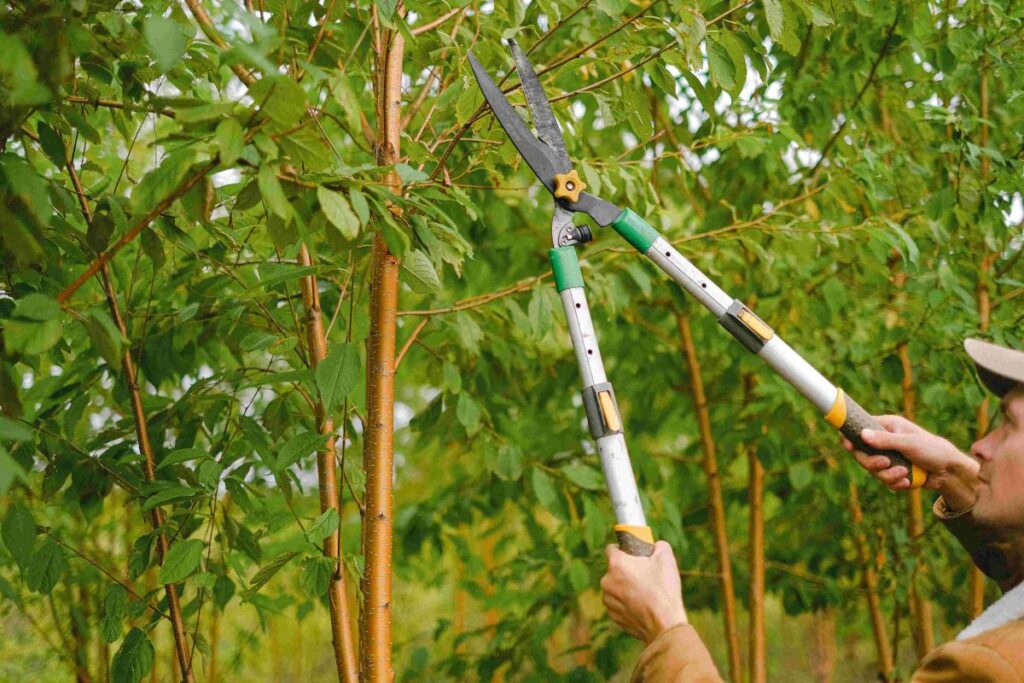
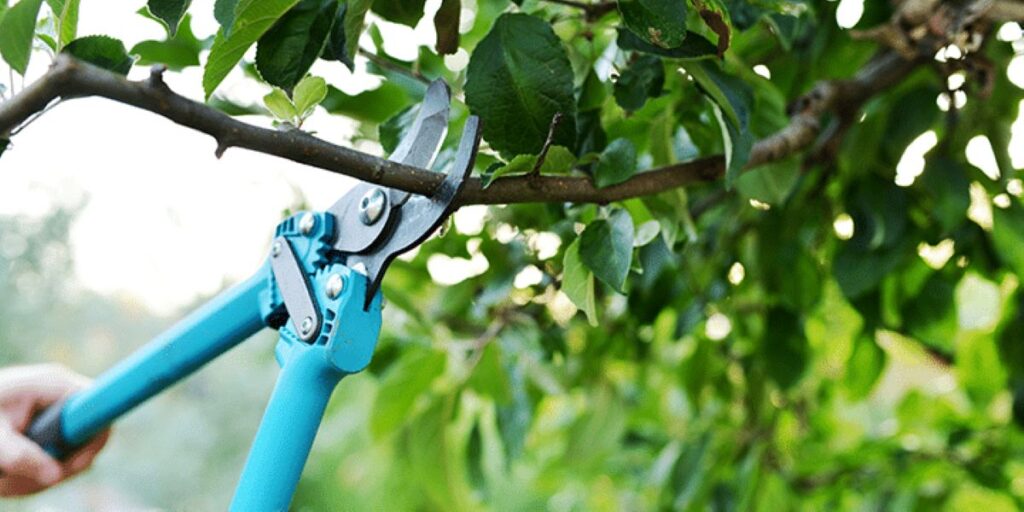
- Sharp, sterilized hand pruners and loppers for clean cuts
- Professional-grade pole saws for reaching higher branches safely
- Hydraulic lifts or bucket trucks for tall tree access
- Chainsaws with proper safety features and regular maintenance
For instance, bucket trucks are invaluable for safely accessing high branches during pruning. Well-maintained tools create precise cuts that heal faster, while dull or damaged equipment causes ragged wounds that invite infection. A reputable service provider regularly sharpens blades, sterilizes cutting surfaces between trees to prevent disease transmission, and inspects all equipment for safety compliance.
The Impact on Safety and Efficiency
The combination of correct techniques and quality tools directly affects both safety and efficiency. Proper pruning methods paired with appropriate equipment reduce the risk of accidents, protect your property from falling debris, and complete the job without unnecessary damage to surrounding landscape features. Companies that invest in professional-grade tools and stay current with industry-approved techniques demonstrate their dedication to delivering results that enhance rather than harm your trees.
Ask potential providers to describe their specific approach to your tree’s situation. Their answer should reference the tree species, current condition, and seasonal considerations that influence their pruning strategy.
Other Resources : Guide to managing the risks of tree work
Do You Provide a Written Estimate or Contract Detailing the Scope of Work, Costs, and Cleanup?
A reputable tree pruning service should always provide a written estimate for tree services before starting any work. This document protects both parties by establishing clear expectations about what will be done, how much it will cost, and what happens after the pruning is complete.
Why Written Documentation Matters
Verbal agreements leave too much room for misunderstandings and disputes. A written contract creates accountability and ensures cost transparency in tree pruning. When a company hesitates to provide documentation, it raises red flags about their professionalism and reliability.
Written agreements also give you legal recourse if the service provider fails to deliver as promised. Without documentation, proving what was agreed upon becomes nearly impossible if conflicts arise.
Essential Elements of a Comprehensive Estimate
A thorough service contract details should include specific information that leaves no room for ambiguity:
- Detailed scope of work: Which trees will be pruned, specific branches to be removed, and pruning objectives (health, safety, aesthetics)
- Itemized pricing breakdown: Labor costs, equipment fees, disposal charges, and any additional services
- Timeline and scheduling: Start date, estimated completion time, and weather contingency plans
- Payment terms: Deposit requirements, payment schedule, and accepted payment methods
- Warranty or guarantee information: Coverage for work performed and timeframe for addressing concerns
The estimate should specify the pruning techniques to be used, such as crown thinning, crown raising, or deadwood removal. This level of detail demonstrates the provider’s expertise and helps you understand exactly what you’re paying for.
Cleanup Responsibilities and Debris Removal
Tree pruning generates significant debris, from small twigs to large branches. The contract should explicitly state who handles cleanup and how thoroughly it will be done. Some companies include complete debris removal in their base price, while others charge separately for hauling away branches.
Key cleanup considerations to verify in writing:
- Debris removal method: Will branches be chipped on-site, hauled away, or left for you to handle?
- Property restoration: Raking leaves, filling ruts from equipment, and returning the area to its original condition
Conclusion
How can these five questions protect your investment in tree care? With these essential questions, you can make confident decisions when choosing tree pruning services that prioritize both your trees’ health and your peace of mind.
The right tree care provider combines certification, experience, proper insurance, professional methods, and transparent communication. Each question serves as a filter, helping you identify professionals who take their craft seriously and respect your property.
Informed decision making in tree care starts with knowing what to ask. When you contact local providers, use these criteria as your checklist:
- Verify certifications before scheduling consultations
- Request detailed experience histories specific to your tree species
- Never proceed without confirming insurance coverage
- Ask for demonstrations or explanations of pruning techniques
- Insist on written documentation before any work begins
What happens when you skip these questions? You risk hiring unqualified contractors who may damage your trees, create safety hazards, or leave you liable for workplace injuries. The few minutes spent asking these questions can save thousands in potential losses.
Your trees represent decades of growth and significant property value. They deserve care from professionals who can demonstrate their qualifications through concrete answers to these 5 Questions to Ask When Booking Tree Pruning Services Near Me.
Take control of your tree care decisions. Print this list, save it to your phone, or bookmark this page. When you’re ready to schedule pruning services, you’ll have the tools to separate qualified arborists from inexperienced operators. Your trees—and your wallet—will thank you.
