
What is a custom car grille badge, and why does it matter?
A custom grille badge is a small emblem mounted on or near the front grille that displays a logo, name, number, flag, or club mark. It matters because it sits at eye level, right where attention goes first.
For enthusiasts, custom car grille badges can signal identity, affiliation, or build theme. For brands, they can turn a vehicle into a moving touchpoint that looks intentional rather than temporary.
How do grille badges elevate vehicle branding instantly?
They elevate branding by adding a clear, recognizable mark to the most visible part of the car. A well-sized badge can make a stock grille feel bespoke in seconds.
It also helps the vehicle tell a story. A motorsport number, a shop logo, or a community emblem can communicate purpose and personality before anyone notices wheels, paint, or aero.
What should the badge design communicate?
It should communicate one idea quickly. The best grille badges are readable at a glance and still look good up close.
If they are branding a business, they should prioritize a simplified logo mark, not a full wordy lockup. If they are personalizing a build, they should match the theme, such as vintage, track-focused, luxury, or off-road, and avoid mixing styles.
Which materials look premium and last the longest?
Metal typically looks and feels the most premium, especially stainless steel, aluminum, brass, or zinc alloy with quality plating. These hold sharp edges and crisp cut lines.
For lighter or more colorful options, layered acrylic can look clean if the edges are polished and the finish is UV-stable. Cheap plastics often fade and scratch, which can make the whole front end look tired.
What finishes work best on a front grille?
Satin and matte finishes hide fingerprints and micro-scratches better than high gloss. Brushed metal can also look “OEM-plus” because it reads as purposeful rather than flashy.
Gloss black can disappear nicely on dark grilles, while chrome can pop on classic builds, but it also highlights imperfections. If they want the badge to look integrated, they should match surrounding trim, such as black pack, brushed aluminum, or brightwork.
How can they choose the right size and placement?
They should size the badge to the grille geometry, not to the logo file. Oversized badges look like merch; undersized badges look accidental.
Placement should respect symmetry and airflow lines. Most badges look best offset slightly to one side or aligned with a grille bar. They should avoid blocking sensors, front cameras, active shutters, or tow hook access points.
Which mounting options are safest for paint and the grille?
There are three common mounting routes: clamp mounts, bolt mounts, and high-bond automotive tape. Clamp mounts are popular because they avoid drilling and can be adjusted to sit level.
Bolt mounts can be the most secure, but they require careful drilling and rust prevention if metal is exposed. Tape can work on flat, clean surfaces, but it is riskier on curved grilles and in extreme heat unless the surface prep is perfect.
How do they prevent rattles, scratches, and vibration wear?
They should use rubber or silicone pads wherever metal meets plastic or painted surfaces. Small anti-vibration washers and thread-lock can help if bolts are used.
They should also check clearance behind the grille. If the badge or bracket touches grille slats, it can squeak over time. A quick shake test before final tightening can prevent months of annoying noise.
What makes a custom badge look “OEM” instead of cheap?
Consistency makes it look OEM. That means clean edges, balanced spacing, and a finish that matches nearby trim.
The badge should also look like it belongs to the vehicle’s design language. Sharp geometric badges suit modern performance cars, while softer shapes and enamel-style fills suit vintage themes. If the badge looks like a sticker turned into metal, it will usually read as aftermarket.
How can they use grille badges for clubs, events, or business fleets?
For clubs and events, grille badges can act like a uniform. They make group photos look cohesive and help people recognize members in parking lots and at meets.
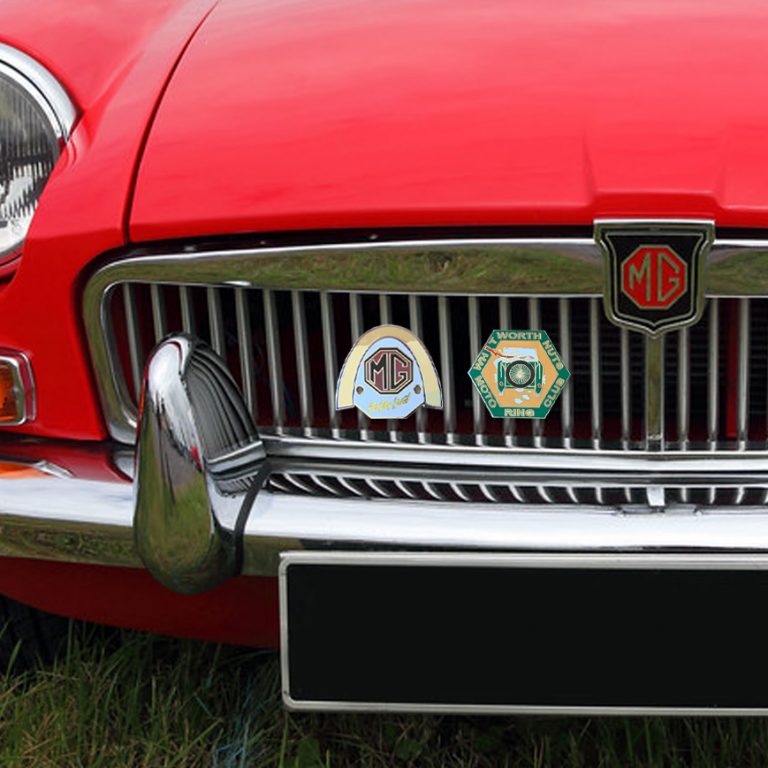
For businesses, they can brand service vehicles in a subtler way than full wraps. A small logo badge can signal professionalism, especially when paired with clean decals on doors or rear glass. It also keeps branding visible in traffic, where the front end is often what others see. Click here to get about luxury custom lapel pins: are they worth the investment?
What are common mistakes they should avoid?
They should avoid tiny text, overly detailed crests, and complex gradients that do not translate to metal or enamel. If it cannot be read from a few steps away, it is not doing its job.
They should also avoid placing the badge where it interferes with sensors or cooling airflow. Finally, mixing too many identity signals, such as brand logo plus flag plus slogan plus number, usually makes the front end look cluttered.
How should they maintain a grille badge over time?
They should wash it with the same gentle routine used on paint: pH-neutral soap, soft mitt, and no harsh abrasives. Metal polishes should be used carefully, and only if the finish supports it.
In winter climates, they should rinse road salt more often. If they use pressure washing, they should avoid blasting the badge edges at close range, especially if it has layered parts or adhesive elements.
What is the simplest way to get a badge that looks right the first time?
They should start by deciding the single message the badge should communicate, then choose a material and finish that matches the vehicle’s trim. After that, they should mock up size and placement with paper or cardboard before ordering.
If they do those three steps, a custom grille badge becomes a clean branding move rather than a risky cosmetic experiment. It can make the vehicle feel more personal, more professional, or more purpose-built, all without changing a single body panel.
FAQs (Frequently Asked Questions)
What is a custom car grille badge and why is it important for vehicle identity?
A custom car grille badge is a small emblem mounted on or near the front grille that displays a logo, name, number, flag, or club mark. It matters because it sits at eye level where attention naturally goes first, signaling identity, affiliation, or build theme for enthusiasts and turning a vehicle into a moving branding touchpoint for businesses.
How do grille badges enhance vehicle branding and personalization?
Grille badges elevate vehicle branding instantly by adding a clear, recognizable mark to the most visible part of the car. They can transform a stock grille to feel bespoke in seconds and help the vehicle tell a story through motorsport numbers, shop logos, or community emblems that communicate purpose and personality before other modifications are noticed.
Which materials and finishes make custom grille badges look premium and durable?
Premium materials include metals like stainless steel, aluminum, brass, or zinc alloy with quality plating that hold sharp edges and crisp lines. Layered acrylic with polished edges can offer colorful options if UV-stable. Satin or matte finishes hide fingerprints and scratches better than high gloss; brushed metal offers an OEM-plus purposeful look. Matching finishes to surrounding trim such as black pack or brightwork helps integration.
What are the best practices for sizing and placing a custom grille badge?
Size the badge according to the grille geometry rather than the logo file to avoid oversized merch-like or undersized accidental looks. Placement should respect symmetry and airflow lines—most badges look best slightly offset or aligned with grille bars. Avoid blocking sensors, cameras, active shutters, or tow hook access points to maintain functionality.
What mounting options protect vehicle paint and ensure badge stability?
Common mounting methods include clamp mounts that avoid drilling and allow adjustment, bolt mounts which require careful drilling and rust prevention but offer security, and high-bond automotive tape suitable on flat clean surfaces with perfect prep. Using rubber or silicone pads between metal and painted surfaces prevents scratches; anti-vibration washers and thread-lock help reduce rattles when bolts are used.
How can I ensure my custom grille badge looks OEM-quality rather than aftermarket?
Consistency is key: clean edges, balanced spacing, and finishes that match nearby trim create an OEM appearance. The badge design should align with the vehicle’s design language—sharp geometric shapes suit modern cars while softer shapes fit vintage themes. Avoid designs that look like stickers turned metal; instead aim for badges that read as intentional parts of the vehicle’s aesthetic.
